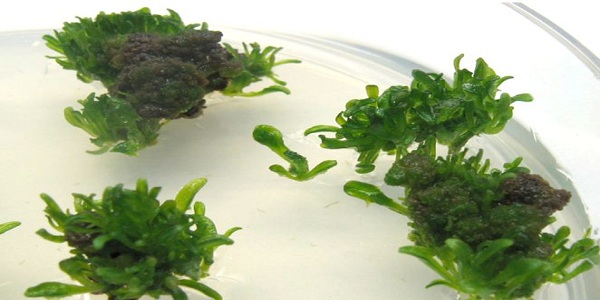
Plant Tissue Culture
“Plant Tissue Culture” is commonly referred to the in vitro culture of plant parts, tissue or organ. Ever since its inception in 1902, as a simple sustained prolonged culture of plant tissues, the field progressed to develop the differential response of the cultured tissues under variable chemical conditions provided the impetus to utilize the technique in a profitable manner. Over the years, the application of the technique became apparent and was used not only to understand the growth and differentiation of tissue or organs, but also extended to industrial applications of these techniques including cell culture. So it became an integral part of biotechnology and is being routinely employed for the improvement of crops and other economically important plants for commercial exploitation in agriculture, genetic engineering horticulture, floriculture, propagation, conservation and pharmaceutical industries. Plant tissue culture started with the concept of ‘totipotency of plant cells’ laid down by the German scientist, Haberlandt in 1902 who is called Father of Tissue Culture.
However, he could not succeed in culturing plant cells but postulated that in anappropriate
nutrient media, the cells can divide, grow and differentiate. It is only in 1930s that three scientists,
Nobecourt (1934), White (1939) and Gouthret (1939) working in different countries and on different
plant tissues demonstrated experimentally that cells or tissues can be cultured continuously in
defined media and plantlets can be regenerated.
To ensure continuous culture of tissue and their differentiation into root/shoot orregeneration
into complete plants many synthetic media have been developed by different scientists all over the
world from time to time. Of the different media, the medium formulated by Murashige and Skoog
(1962) is widely used. Plant Tissue culture got a great momentum as the range of possible
experiments on the control of growth of cultured
embryos was greatly extended with the discoveries and isolation of auxins (1934), gibberellicacid
(1939) and cytokinins (1955).
In tissue cultures plantlets may be regenerated either through root and shoot
differentiation(organogenesis) or the cells may develop zygote- like structures called ‘somaic
embryos’ or ‘embryoids’ (embryogenesis). The first report of embryoid formation from carrot tissues
appeared in 1958-1959 by Reinert (Germany) and Steward (USA). Haploid and homozygous
diploids are highly desirable for breeding programmes for superior traits. Guha and Maheshwari
(1964), for the first time regenerated haploids from Datura innoxia. Another breakthrough was by
Melchers (1977) who demonstrated the fusion of protoplasts of tomato and potato. The hybrid
developed and produced flowers and fruits called ‘pomato’ and the suckers ‘topato’, the latter were
thick and flat, full of starch grains (equivalent of potato).
In view of the significance of technique, scientists have turned to seek benefit that accrued
from the practical application of the technique. The tissue culture heralds a new area of progress in
science as it has been upgraded to the status of biotechnology in extending its scientific frontiers to
a wide range of
problems and innovative ventures attending with an element of novelty, curiosity and
expectation in man’s quest for food, fibre and pharmaceuticals.
In short, are developments and culmination of Plant Tissue culture from technique to
technology and is now successfully employed in different areas of biotechnology. Tissue culture
provides large platform for enhancing knowledge in different disciplines and give opportunities for
quality research, innovation and employment.